Why Does My Garage Door Reverse Before Closing in St. Joseph, MN?
Quick Answer:
Garage doors reverse before closing when the system detects resistance, an interrupted safety beam, or a force imbalance during the closing cycle. The most common causes include misaligned sensors, ice buildup at the base of the door, track obstruction, cold weather friction, or opener force settings that are too sensitive.
In most situations, the door is not failing. It is responding to a condition that looks unsafe from the system’s point of view.
What Causes a Garage Door to Reverse Mid-Cycle
If your garage door starts closing and then suddenly reverses back up, it is not random, and it is not just being stubborn.
In St. Joseph, this is one of the most common garage door problems, especially during the colder months when the system is dealing with snow, moisture, freeze-thaw cycles, and heavier daily use. Most homeowners assume something is broken, but in many cases, the door is doing exactly what it was designed to do. It is reacting to something the system believes is unsafe or outside normal operating conditions.
The key is understanding what the opener is sensing and why it is responding that way.
Symptom vs. Cause: What Your Garage Door Behavior Usually Means
| If the door reverses… | It likely means… | First thing to check |
| Immediately after starting to close | The safety beam is blocked or misaligned | Sensor alignment and dirty lenses |
| Halfway down | Mechanical resistance or obstruction | Track condition and debris |
| Near the floor | The system thinks it hit something | Ice buildup, bottom seal resistance, or force settings |
| Only at certain times of day | Sensor signal is being disrupted | Sunlight hitting the receiving sensor |
What’s Actually Happening When Your Door Reverses
Modern garage door systems are designed to monitor both sensor communication and physical resistance in real time. As the door moves downward, the opener checks whether the safety beam remains uninterrupted and whether the amount of closing force stays within its programmed range.
If the beam breaks or the resistance climbs above what the opener considers safe, the system immediately reverses direction. That is not a flaw. It is a built-in safety response meant to prevent injury, avoid damage to the door, and protect the opener itself.
In Minnesota, the challenge is that environmental conditions often create false triggers. Cold weather, moisture, dirt, frost, and subtle shifts in alignment can make the system react even when the issue is not obvious to the homeowner standing in the garage.
The Most Common Reasons Your Garage Door Reverses
Sensor Misalignment or Dirty Lenses
Safety sensors sit near the bottom of the tracks and send an invisible beam across the garage opening. If that beam is blocked, interrupted, or slightly off line, the opener assumes something is in the way and reverses the door.
In real St. Joseph garages, this is often caused by everyday movement and winter clutter. A shovel gets bumped, a storage tote shifts, or condensation forms on the lens. Even a little frost or dust can weaken the signal enough to create inconsistent closing behavior. Because the system is designed to be cautious, it does not take much to trigger a reversal.
Ice or Resistance at the Bottom of the Door
This is one of the biggest Minnesota-specific causes, and it shows up fast after a cold night.
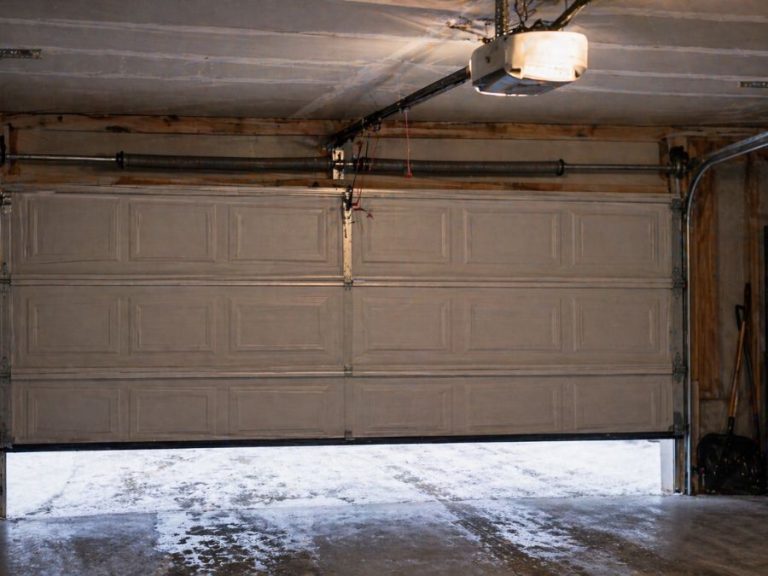
Snow and slush melt off vehicles during the day and collect near the threshold. Overnight, that moisture refreezes along the base of the door. When the door comes down and meets that resistance, the opener interprets it as an obstruction and reverses before fully closing.
Even a thin layer of ice can cause this. That is why a garage door can work normally one evening and start reversing the next morning after temperatures drop.
Track Obstruction or Subtle Misalignment
Garage door tracks are built for smooth, guided movement, but they are sensitive to friction and misalignment. A complete blockage is not necessary to create a problem. A small bend, built-up debris, or even an object resting lightly against the track can interfere with the rollers enough to trigger the opener’s safety response.
This is especially common in garages that double as storage space. It also shows up more often in older detached garages near the historic core, where settling over time can affect track alignment in small but important ways.
Cold Weather Increasing System Resistance
Cold weather changes how every moving part in the system behaves. Lubricants get thicker, metal contracts slightly, and rubber components become stiffer. That added resistance often shows up late in the closing cycle, when the opener expects the door to move smoothly into place.
If the system senses more resistance than it expects, it may reverse as a precaution. This is one of the reasons a garage door can behave perfectly in mild weather and then suddenly act up during a St. Joseph cold snap.
Opener Force or Travel Settings Are Off
Garage door openers are calibrated to apply a certain amount of force and stop at a specific point in the closing cycle. If those settings are too sensitive or slightly off, the opener may interpret ordinary closing pressure as a problem and reverse the door.
This can happen after a power outage, seasonal temperature shifts, or previous adjustments that were never dialed in correctly. When combined with winter resistance, even a small settings issue can become much more noticeable.
How to Tell What’s Causing the Problem in Seconds
You can usually narrow down the cause by watching where and how the reversal happens.
If the door reverses immediately after it starts to close, the safety sensors are the most likely cause. If it makes it most of the way down and then reverses near the ground, resistance at the threshold is usually the issue, whether that is ice, a stiff bottom seal, or overly sensitive force settings.
If the motion looks uneven, hesitant, or strained, the problem is usually mechanical. Track friction, roller drag, cold-weather stiffness, or minor misalignment are all likely possibilities. Watching the timing of the reversal gives you one of the best clues in the entire troubleshooting process.
Step by Step: How to Fix a Garage Door That Reverses Before Closing
Start with the easiest checks first. In many cases, the fix is simple once you isolate the cause.
- Clean the sensor lenses.
Use a soft cloth to wipe away dust, condensation, or frost from both sensor lenses. In winter, even a light film can weaken the signal enough to trigger a reversal. - Align the sensor brackets.
Make sure both sensors are facing each other directly and that their indicator lights are steady, not blinking. If one light is flickering or off, the beam is likely out of alignment. - Clear the threshold.
Check the base of the door for ice, packed snow, or debris. If the door is encountering resistance at the floor, it may reverse as a safety measure before it fully closes. - Inspect the tracks.
Look for debris, minor obstructions, or anything pressing against the rollers or track. Even small interference can create enough drag to stop the closing cycle. - Lubricate the moving parts.
Apply a silicone-based garage door lubricant to rollers, hinges, and other moving metal components. In cold Minnesota weather, proper lubrication helps reduce the friction that often causes reversal issues. - Observe the door’s movement.
Run the door and watch carefully for hesitation, jerking, or extra resistance near the bottom. How the door moves often tells you more than the opener lights or sounds alone. - Check the opener force and travel settings.
If the door is clear, the sensors are aligned, and the tracks look good, the opener settings may need adjustment. Force settings that are too sensitive can make the opener reverse even when nothing is technically blocking the door.
If the issue continues after these steps, the problem likely goes beyond simple maintenance and needs a closer mechanical or electrical inspection.
St. Joseph Pro Tip: The Sunlight Blindness Problem
During Minnesota winters, the sun sits lower on the horizon, and that can create a problem many homeowners never think about. If your garage door only reverses during certain times of day, especially in the late afternoon, direct sunlight may be hitting the receiving sensor and interfering with the beam.
This can make the system behave as if the sensors are misaligned even when they are not. If that pattern sounds familiar, try shading the sensor slightly with a simple cover to block direct glare. It is a small detail, but it is one of those local cold-season issues that can be easy to miss if you are not looking for it.
Contractor’s Pro Tip for St. Joseph Winters
If your garage door reverses right at the bottom during a cold snap, inspect the threshold before assuming the opener is failing.
A thin layer of ice at the base of the door can create just enough resistance to trigger a reversal. Repeatedly hitting the opener button to force it closed can strain the motor and wear out components faster. Clear the threshold first, then test the door again. In many cases, that simple step solves the problem immediately.
Why This Happens More Often in St. Joseph
Local conditions make this problem more common here than in milder climates. Older homes in the downtown grid often have detached garages that are more exposed to moisture, shifting temperatures, and freeze-thaw movement. Newer homes in areas like St. Joe West or Callaway Estates tend to have larger and heavier doors, which makes them more sensitive to added resistance.
Across both types of homes, the garage is heavily used during winter as the main entry point. That means more cycles, more snow and salt being tracked in, and more opportunities for moisture, clutter, and alignment issues to affect the system. When you combine that with cold weather, it is easy to see why reversal problems show up so often in St. Joseph.
When to Call a Professional
If your garage door keeps reversing after basic troubleshooting, or if the movement feels strained, uneven, or inconsistent, it is time to bring in a professional.
Problems involving track alignment, force calibration, internal opener components, or recurring sensor issues require proper tools and adjustment. Trying to force the system to work can create more damage and turn a manageable repair into a more expensive one.
Final Thoughts
When your garage door reverses before closing, it is not malfunctioning for no reason. It is responding to something it considers unsafe, whether that is a broken sensor beam, resistance at the threshold, or extra strain somewhere in the system.
In St. Joseph, cold weather, moisture, and heavy winter use create exactly the kind of conditions that trigger these issues more often. The good news is that once you know what the system is reacting to, the problem becomes much easier to diagnose and fix.
Need Help Fixing a Garage Door That Won’t Stay Closed?
If your garage door keeps reversing and you are in St. Joseph or anywhere in Stearns County, having it inspected by someone familiar with Minnesota conditions can save time and frustration.
Getting the root cause identified quickly will restore normal operation and help prevent the issue from coming back the next time temperatures drop.