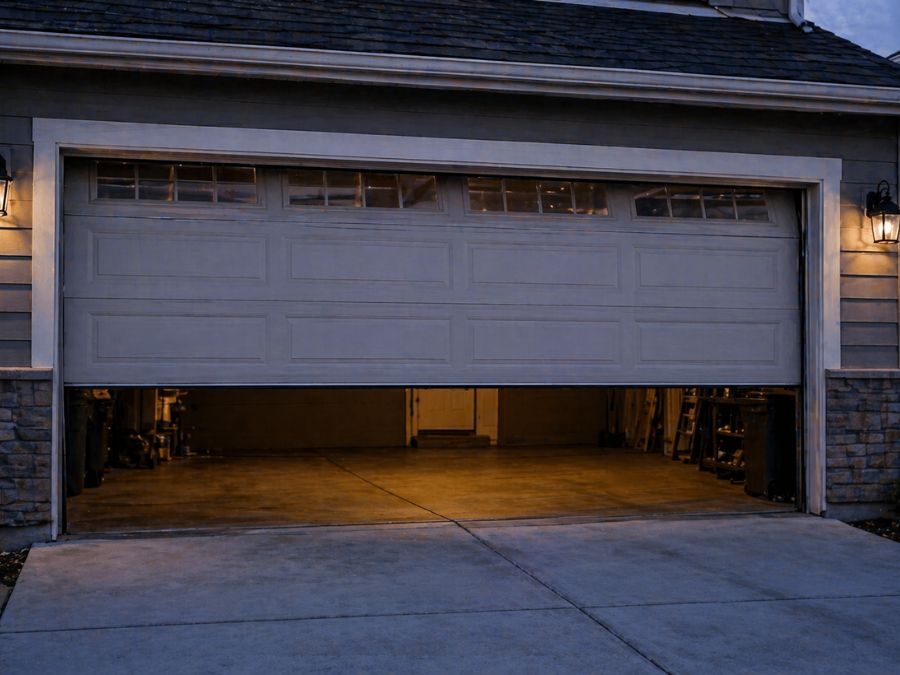
Why Does My Garage Door Open By Itself in St. Cloud, MN?

Quick Answer: 
Garage doors open by themselves because the opener is receiving an unintended signal or experiencing an internal electrical issue. The most common causes include signal interference, faulty wiring, stuck wall buttons, malfunctioning remotes or keypads, or problems with the opener’s logic board.

Once you identify where that signal is coming from, the issue is usually straightforward to resolve.

When Your Garage Door Opens Without You Touching It

If your garage door opens on its own—especially when you are not home—it can feel unsettling very quickly. Most homeowners in St. Cloud immediately jump to worst-case scenarios, whether that means someone accessing the system or a serious mechanical failure.

In reality, a garage door that opens by itself is almost never random. It is almost always the result of a signal being sent to the opener or an electrical issue that mimics that signal. The system is not acting independently—it is reacting to something it interprets as a command to open.

Understanding that distinction is important because it turns what feels like a mysterious problem into something that can be diagnosed and fixed with a clear process.

What This Behavior Usually Means

Timing of the OpeningLikely CauseFirst Thing to Check
Immediately after closingTravel limit settingsAdjust down travel limits
Random times (day or night)Signal interference or logic board issueReset system and remotes
After a storm or outagePower surge damageInspect opener electronics
When neighbor arrives homeFrequency overlapUpgrade to rolling code system

What’s Actually Happening When Your Door Opens on Its Own

Garage door openers are designed to respond only when they receive a signal. That signal can come from a remote, a wall-mounted button, a keypad, or a smart home application. When everything is working properly, the system only reacts when you intentionally send that command.

When the door opens unexpectedly, one of two things is happening behind the scenes. Either the opener is receiving a signal you did not intend to send, or there is an electrical issue causing the system to behave as if a signal was received. From a homeowner’s perspective, this feels random. From the system’s perspective, it is simply responding to what it believes is a valid input.

The goal is not to guess—it is to trace where that input is coming from.

The Most Common Reasons Your Garage Door Opens By Itself

Remote Signal Interference

Garage door openers operate on radio frequencies, and those frequencies can sometimes overlap with nearby devices. In neighborhoods where homes are closer together, such as newer developments in St. Cloud, multiple garage door systems may be operating within the same range.

Older openers are more vulnerable to this issue because they use fixed codes. These systems respond to a limited set of signals, which increases the chance of overlap with another transmitter. When that happens, your opener may react to a signal that was never meant for your system.

Modern openers use rolling code technology, which dramatically reduces this risk by constantly changing the signal pattern.

A Stuck or Faulty Wall Button

The wall-mounted control inside your garage is a simple device, but it can create confusing behavior when it starts to fail. Over time, the internal contacts can wear down or become sensitive to temperature changes.

In St. Cloud, where temperatures fluctuate significantly between seasons, those changes can affect electrical connections. A worn or partially stuck button may send intermittent signals without you realizing it, causing the door to open unexpectedly.

Because this happens inconsistently, it often feels like a random issue when it is actually a failing component.

Wiring Problems or Short Circuits

Low-voltage wiring connects your wall button to the opener, and while it carries minimal current, it still needs to remain intact and insulated. If that wiring becomes damaged, pinched, or exposed, it can create a short circuit that mimics a button press.

In garages that are used for storage, items often shift over time and press against wiring. In older homes, insulation around the wires can degrade, making the system more susceptible to intermittent signals.

This type of issue tends to develop gradually, which is why the problem may appear sporadic at first.

Remote or Keypad Malfunction

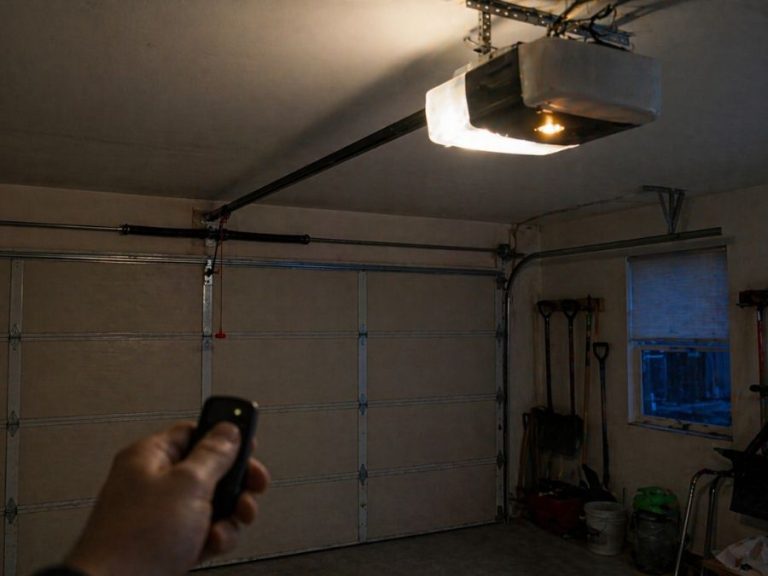
Remotes and keypads are often overlooked during troubleshooting, but they are a frequent source of unintended signals. A remote that is stuck under a seat, pressed inside a bag, or damaged internally can repeatedly trigger the opener without your knowledge.

Keypads are also vulnerable to environmental conditions. In Minnesota winters, moisture and freezing temperatures can affect their internal electronics, leading to inconsistent or unintended activation.

Because these devices are not always visible when they are triggered, they are easy to overlook, even though they are among the simplest problems to resolve.

LED Light Interference

One of the most common modern causes of this issue is interference from LED lighting. Certain LED bulbs emit electromagnetic interference that can disrupt the signal between your remote and the opener.

If LED bulbs are installed near the opener, especially in the garage ceiling fixture, they can interfere with the receiver and create false triggers. This issue has become more common as more homeowners switch to energy-efficient lighting.

A simple test is to remove the bulbs temporarily and observe whether the problem stops. If it does, switching to garage-rated LED bulbs will typically resolve the issue.

Smart App or Automation Glitches

Many newer homes in St. Cloud use smart garage systems that allow control through mobile apps. These systems often include automation features such as scheduled openings, geofencing, or shared access with other users.

If your garage door is connected to a smart system, it is important to review these settings. Automations can trigger the door without you realizing it, especially if multiple users have access or if location-based settings are enabled.

Most smart systems also provide an activity log, which can show exactly what triggered the door to open.

Logic Board or Opener Malfunction

Inside the opener is a logic board that acts as the control center for the entire system. It processes incoming signals and determines when the motor should activate.

If the logic board becomes damaged, it can cause erratic behavior, including doors opening on their own. In St. Cloud, this is often related to power surges during storms or electrical fluctuations during winter outages.

When the internal electronics are compromised, the system may respond to signals that do not actually exist, which makes the issue harder to trace without proper inspection.

How to Tell What’s Causing the Problem

Identifying patterns is one of the most effective ways to diagnose this issue. If the door opens at completely random times, signal interference or wiring problems are likely causes. If it happens at the same time each day, environmental factors or automated settings may be involved.

If the door opens shortly after closing, travel limit settings or internal calibration may need adjustment. Paying attention to when the issue occurs provides valuable clues that help narrow down the source.

Step by Step: How to Fix a Garage Door That Opens By Itself

A systematic approach is the best way to identify and resolve the issue without unnecessary guesswork.

  1. Remove the batteries from all remotes and monitor whether the problem stops. This helps eliminate remotes as a source of unintended signals.
  2. Disconnect the wall button wiring from the opener to determine whether the issue is coming from the control panel or its wiring.
  3. Inspect all visible wiring for damage, pinching, or exposed sections that could cause a short circuit.
  4. Reset the opener and reprogram all remotes to eliminate signal interference or duplicate codes.
  5. Remove or replace LED bulbs near the opener to rule out electromagnetic interference.
  6. Review any smart home settings, including automations and shared access, to ensure nothing is triggering the door.
  7. Observe the system after each step to identify when the behavior changes and isolate the cause.

If the issue continues after completing these steps, the problem is likely internal and requires further inspection.

The St. Cloud Factor: Why This Happens More Often Here

Local environmental conditions play a significant role in how garage door systems behave over time. St. Cloud’s proximity to the Mississippi River contributes to higher humidity levels during warmer months, which can affect wiring and internal components.

When winter arrives, rapid temperature drops cause materials to contract, which can impact electrical connections and create intermittent behavior. Combined with seasonal storms and power fluctuations, these conditions increase the likelihood of signal-related issues.

Heavy year-round use of garage doors in this region also adds to the overall wear on the system.

Is This a Security Risk?

This is often the biggest concern for homeowners, and it is understandable. In most cases, the issue is not related to unauthorized access. However, older garage door openers that use fixed codes are more vulnerable to signal duplication.

Modern systems use rolling code technology, which generates a new signal each time the remote is used. This makes it extremely difficult for anyone to replicate or intercept the code.

If your opener is older, upgrading to a newer system provides both improved reliability and enhanced security.

When to Call a Professional

If your garage door continues to open on its own after troubleshooting, or if the behavior appears completely unpredictable, it is time to have the system inspected by a professional.

Electrical issues, wiring problems, and logic board failures require proper diagnostic tools and experience. Continuing to operate the system without resolving the issue can lead to further damage or ongoing concerns.

Final Thoughts

When your garage door opens by itself, it is not acting randomly. It is responding to a signal or reacting to an internal issue, even if that signal is not immediately obvious.

In St. Cloud, environmental conditions and electrical stress can make these issues more noticeable over time. The important thing is understanding that the problem is traceable and, in most cases, fixable.

Need Help Fixing a Garage Door That Opens on Its Own?

If your garage door is opening unexpectedly and you are in St. Cloud or the surrounding area, having it inspected by someone familiar with local conditions can help you quickly identify the root cause.

Addressing the issue early restores normal operation and ensures your system remains reliable and secure.

Similar Posts