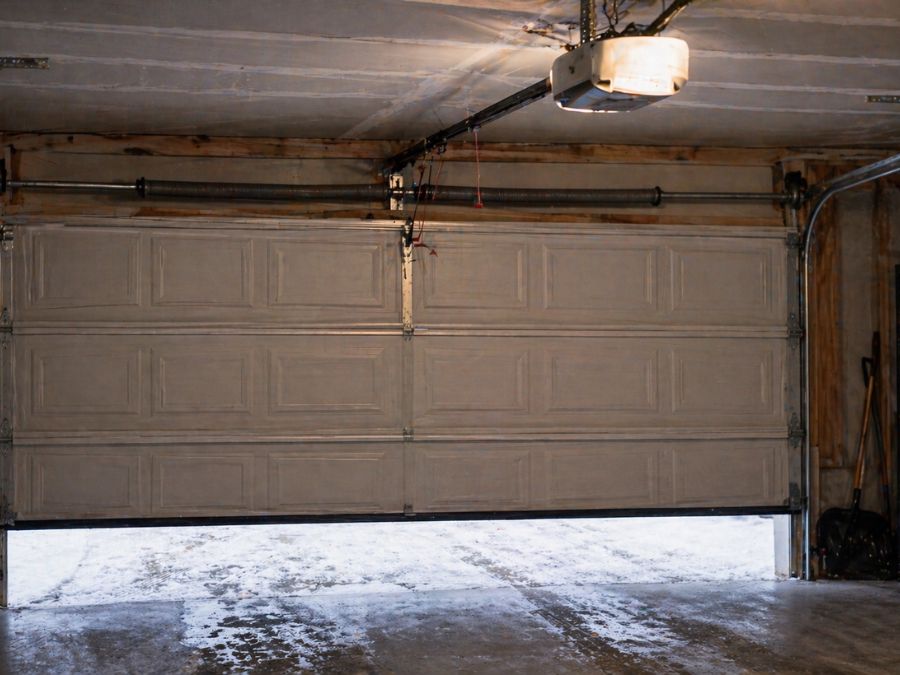
Can I Open My Garage Door With a Broken Spring in St. Cloud, MN?
Quick Answer:
No — you should not try to open a garage door manually with a broken spring. The spring exists to counterbalance the door’s full weight; without it, the door can drop suddenly and cause serious injury or damage. Leave the door as-is and call a technician rather than forcing it open or closed.
The Risks of Forcing a Garage Door with a Broken Spring
If your garage door suddenly won’t open—or feels extremely heavy—there’s a good chance you’re dealing with a broken spring. And in that moment, the question most homeowners in St. Cloud ask is simple:
Can I still open it?
Technically, yes. But in real-world conditions, it’s not something you want to do unless absolutely necessary.
In Minnesota, where garages are used as the main entry point—especially during winter—a broken spring is more than an inconvenience. It’s a system failure that changes how the entire door behaves, and forcing it can quickly turn a simple repair into a much bigger problem.
What This Situation Usually Means
| Situation | What It Means | What to Do |
| Door won’t open at all | Spring likely broken | Do not force opener |
| Opener runs but door doesn’t move | Trolley or spring issue | Inspect spring first |
| Door feels extremely heavy | No counterbalance | Do not lift alone |
| Loud bang heard in garage | Spring snapped | Stop using the door |
How to Tell If Your Spring Is Broken in 30 Seconds
In most cases, a broken spring is easy to identify once you know what to look for.
If your garage door won’t open and the opener just hums or struggles, the spring is no longer supporting the door. If it lifts a few inches and stops, the opener is fighting full weight and shutting down.
A loud bang from the garage is another strong indicator. Springs break under tension, and when they snap, it often sounds like something hitting the wall. You may also notice the door suddenly feels extremely heavy when lifted manually, which confirms the counterbalance is gone.
How Heavy Is Your Garage Door Without a Spring
Most residential garage doors weigh between 150 and 300 pounds, depending on size and construction. When the spring is working, that weight is balanced, so the door feels light and controlled.
Once the spring breaks, you’re dealing with the full weight of the door.
Think of it this way: lifting a double garage door with a broken spring is like trying to deadlift a 300-pound refrigerator—except that “refrigerator” is on tracks and can slide back down on you at any moment. That’s where the real risk comes in.
What the Spring Actually Does
Garage door springs are the core of the system. They store and release tension to counterbalance the weight of the door, making it possible to open and close smoothly.
The opener is not built to lift the door on its own. Its role is to guide movement, not carry a load. When the spring fails, that balance disappears instantly, and every other component is forced to compensate.
That’s why a broken spring immediately affects the entire system, not just one part.
What Happens If You Try to Open It Anyway
Trying to operate the door with a broken spring is where most secondary damage happens.
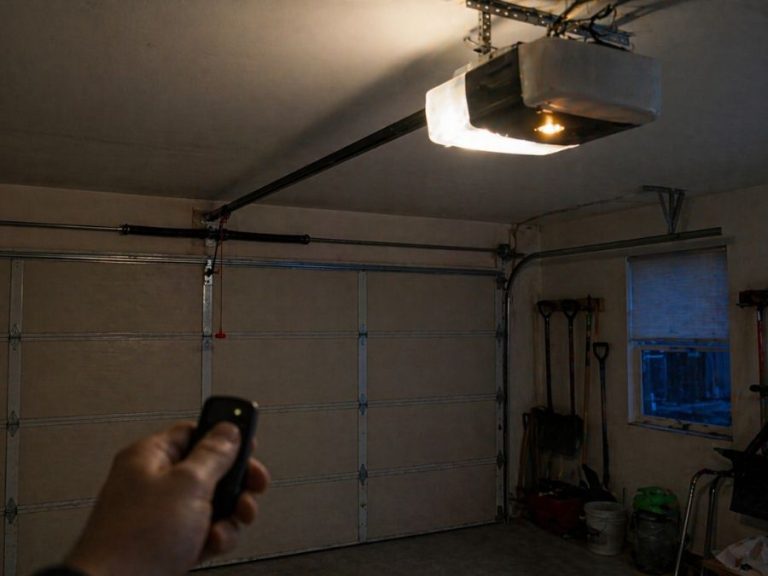
The opener may attempt to lift the door, but it’s not designed for that kind of load. Forcing it can strip internal gears, burn out the motor, or damage the rail system.
The Real Cost of Forcing It
A standard spring replacement is typically a straightforward, affordable repair. But if you push the opener to lift a dead-weight door, you can easily turn that into a much more expensive problem.
Stripped gears, damaged drive systems, or a failed opener can take what would have been a basic repair and turn it into a full system replacement, costing significantly more.
Torsion vs. Extension Springs (Why It Matters)
Most newer homes in St. Cloud use torsion springs mounted above the garage door. These are more durable, provide better balance, and tend to fail in a more controlled way.
Older systems may use extension springs along the sides. These can snap more suddenly and create more unpredictable movement when they break.
Understanding which type you have helps explain how the failure appears and why proper handling is important.
Why Springs Fail When They Do
Garage door springs are rated for a certain number of cycles, typically around 10,000 openings and closings. In St. Cloud, where garages are used as the primary entry point, that cycle count is reached faster than many homeowners expect.
Cold weather adds another layer of stress. As temperatures drop, metal contracts and becomes more brittle under tension.
The St. Cloud Factor
St. Cloud’s proximity to the Mississippi River creates higher humidity in warmer months, followed by rapid temperature drops in winter. That moisture can lead to microscopic corrosion on the spring surface.
Think of it like a weak point in the metal. When the cold hits and tension increases, that’s often where the spring fails. It’s one of the reasons spring breakage seems to happen suddenly during cold snaps.
Is It Ever Safe to Open the Door?
There are situations where opening the door manually may be necessary, but it should only be done with caution and as a temporary solution.
If you absolutely need access, the door can be opened—but it must be controlled carefully to avoid injury or damage.
How to Safely Open a Garage Door With a Broken Spring (Emergency Only)
- Disconnect the opener
Pull the red emergency release cord to separate the door from the motor. - Get help
Never attempt to lift the door alone. You need at least one person on each side to control the weight evenly. - Lift with control
Keep your back straight and lift slowly and evenly. The door will be much heavier than expected. - Secure the door in place
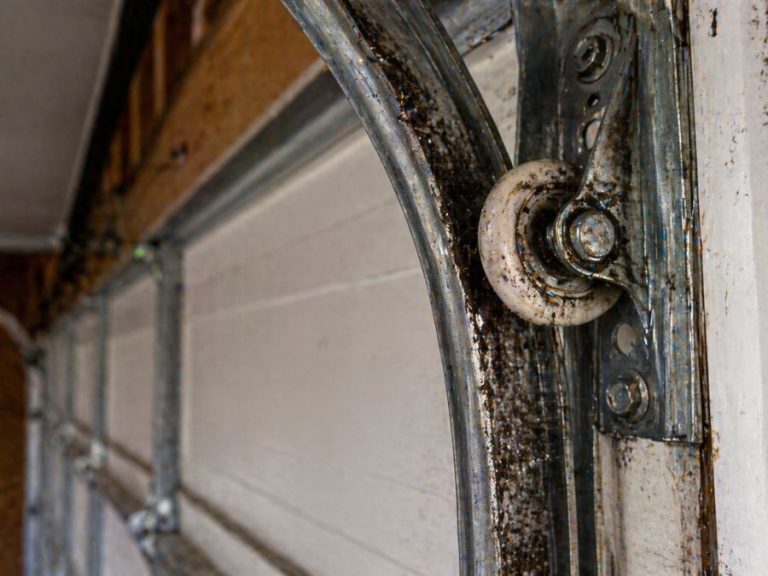
Once open, use locking pliers or vice grips on the track below the rollers to prevent the door from sliding back down. Never trust it to stay open on its own.
This is strictly a temporary solution and should not be used repeatedly.
Why This Happens More Often in St. Cloud
Local conditions play a major role in spring failure.
Cold temperatures increase stress on metal components, while heavy daily use increases cycle count. Homes with larger garage doors, especially in newer developments, place even more demand on spring systems.
Across St. Cloud, garages are used constantly—especially in winter. That combination of environmental stress and usage is exactly what leads to spring failure.
When to Call a Professional
If your garage door won’t open, feels unusually heavy, or you suspect a broken spring, it’s time to call a professional.
Spring systems operate under high tension and require proper tools and experience to repair safely. Attempting to fix it yourself or continuing to use the door can lead to injury or further damage.
Addressing it early usually keeps the repair simple and prevents additional problems.
Final Thoughts
A broken spring changes everything about how your garage door operates. What used to be a balanced system becomes heavy, unpredictable, and harder on every component involved.
While it may be possible to open the door temporarily, it’s not something you want to rely on. The risks—both mechanical and safety-related—outweigh the convenience.
In St. Cloud, where garage doors are used daily in all conditions, a properly functioning spring is essential. When it fails, the smartest move is to fix it quickly and correctly.
Need Help With a Broken Garage Door Spring?
If your garage door won’t open and you suspect a broken spring, getting it inspected quickly can prevent additional damage and restore safe operation.
In most cases, spring replacement is a fast, straightforward repair when handled early. Working with someone familiar with St. Cloud conditions ensures the job is done safely and correctly the first time.